
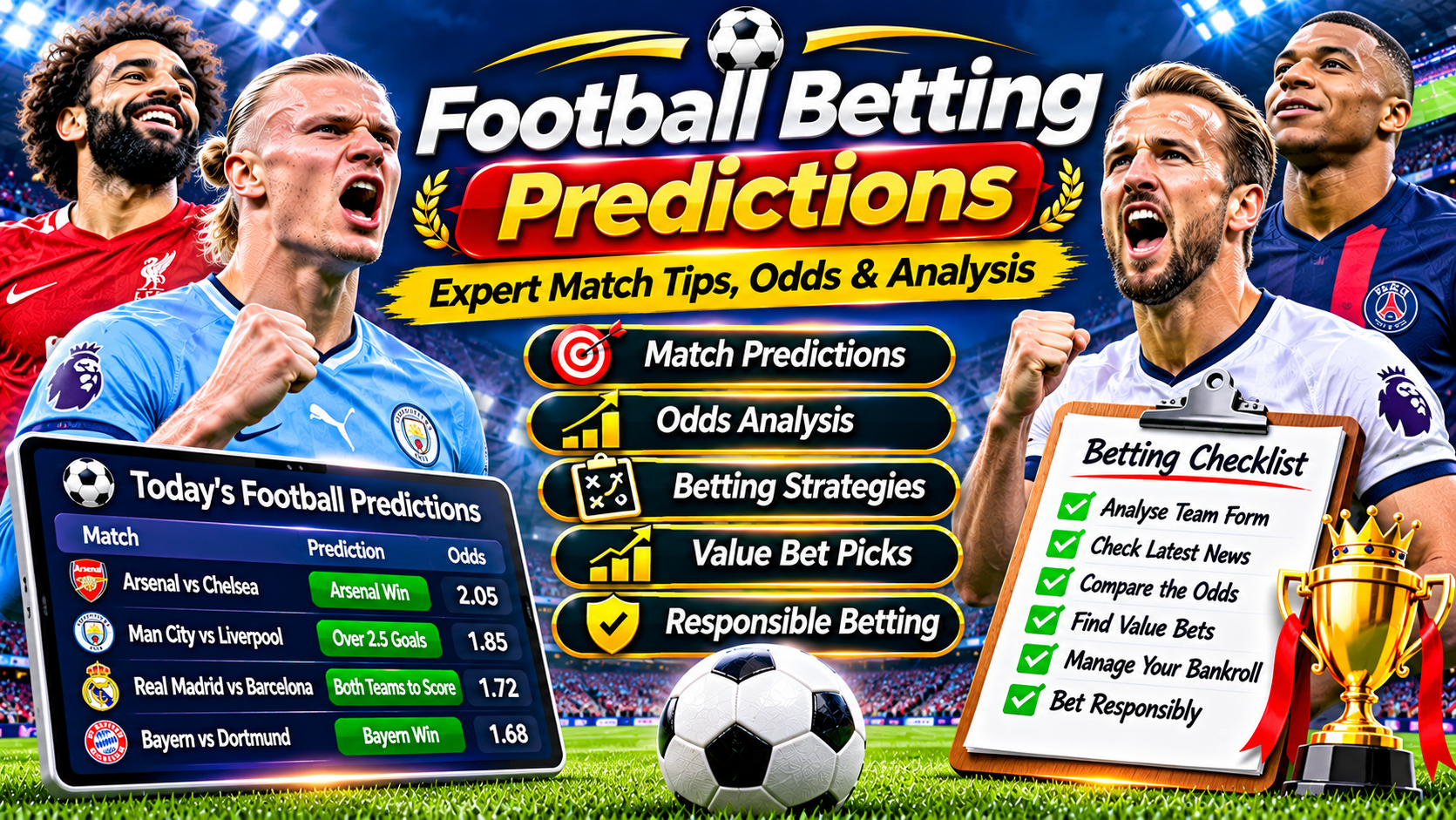
Start With a Match Checklist Before You Bet
Use a repeatable checklist so your selections aren’t based on emotion or a single headline. Begin by confirming the matchup context: venue type, travel factors, and whether either side is likely to rotate for other competitions. Then review Football Betting Predictions the probable lineup signals from reliable beat sources, training updates, and recent substitutions patterns. If key roles are unclear, your checklist should flag the bet as higher risk until roles are confirmed.
Next, verify motivation and style fit rather than chasing a team name. Compare each side’s typical build-up, pressing intensity, and defensive shape to what the opponent tends to exploit. A strong checklist also forces you to think about game state scenarios, such as whether one team is more comfortable controlling possession or reacting after conceding. If the matchup suggests a cagey script, you may prioritize safer markets like double-chance or under/over lines with cushion.
Analyze Form, Injuries, and Matchups With Clear Signals
Form analysis should be specific enough to predict a tactical outcome, not just a win-loss record. Look at how a team generates chances: their shot volume, shot quality, and the zones where they consistently create danger. Then cross-check with defensive tendencies, including how often they allow high-value looks and whether they concede from open play or set pieces. This lets you connect “recent results” to “repeatable patterns” that matter for betting.
Injuries and availability are often the biggest checklist item, especially when they affect balance. Note whether absences impact one phase of play, like a missing playmaker in the half-space or a fullback who drives wide. Also pay attention to disciplinary risk and how suspensions can change midfield structure. Finally, compare matchups: identify whether one team’s attacking strengths collide with the opponent’s weakest defensive zone, such as transitions, crosses, or late-box runs.
Choose Markets Carefully: Odds, Goals, and Value Checks
Before committing to a wager, translate the matchup into market logic. Goal markets are a common starting point, but use them with thresholds that fit the game script. If both teams tend to trade chances, you can evaluate appropriate over/under lines based on historical scoring patterns and pace indicators. If the matchup looks tighter, consider markets that reflect scoring uncertainty, such as under-focused lines or “team to score” options with more realistic expectation ranges.
For odds evaluation, use a value checklist rather than chasing the biggest payout. Compare current prices against your own probability estimates using form, injuries, and tactical matchups. If odds offer a poor price for the edge you expect, it may be better to skip or switch to a correlated market with better alignment. Also watch for bookmaker movement and line tightening, which can signal market consensus and reduce value if it moves against you.
Build a Safer Betting Plan With Risk Controls
A responsible approach begins with stake sizing rules that you can repeat across fixtures. Decide your maximum exposure per match and per betting slip before you research further, so emotions never increase risk after losses. Consider using smaller stakes on exploratory bets while reserving larger stakes for selections that pass every checklist step. If a match has incomplete lineup information, reduce stake size or avoid markets that depend heavily on exact roles and minutes.
Use correlation awareness to avoid overloading a single game narrative. For example, combining multiple bets that all rely on the same outcome, like a narrow win and high scoring, can compound risk. Instead, diversify across market types when appropriate, such as pairing a result-oriented view with a separate defensive/goal logic bet when the matchup supports it. Keep a short review loop after matches too: record what you believed, what happened, and which checklist signals were most predictive.
Conclusion
A checklist approach helps you evaluate lineups, tactical matchups, and probability signals in a structured way. When you connect those signals to the right markets, you improve consistency and reduce the likelihood of chasing noise. Use responsible betting habits alongside expert analysis. Manage stakes, avoid correlated overload, and treat uncertainty as a legitimate factor in your decision-making. With a repeatable checklist and value-focused market selection, you can approach each preview with clarity and discipline.
