
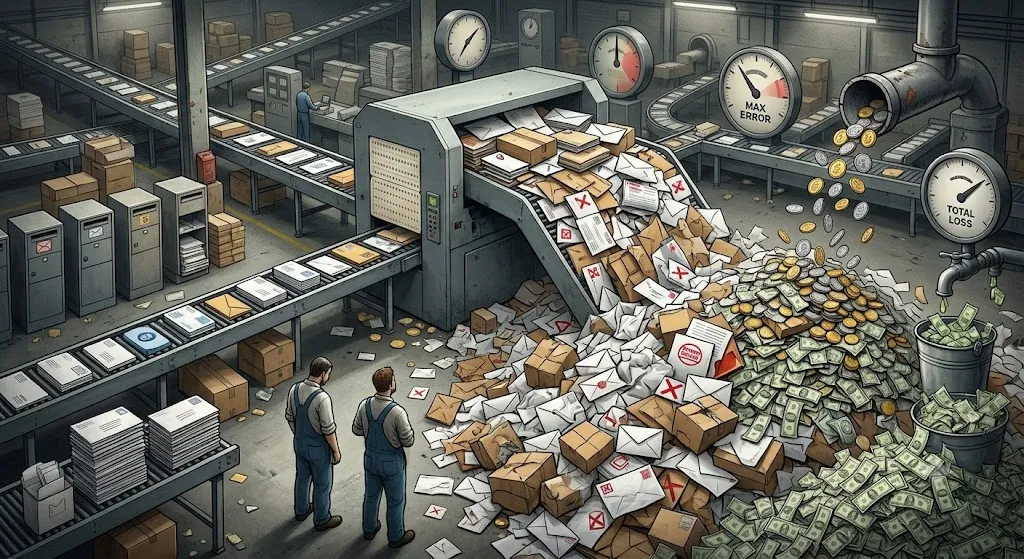
Most people only notice a bad list when a campaign flops. By then the money has already left the building. Running bulk email address verification before sending is cheaper than the problems it prevents, and a few simple numbers make that obvious enough to act on.
Start With a Simple Example
Imagine a list of 50,000 contacts where eight percent of the addresses are invalid. That’s 4,000 messages going nowhere every single time you hit send. Plenty of lists carry more decay than that, especially if the contacts were collected years ago and never reviewed. It’s a modest percentage, yet the waste repeats with every campaign.
Now picture sending twice a month. Over a year, you’d push roughly 96,000 emails into the void. No human read any of them, yet you paid for the sending volume and counted those contacts as part of your audience when planning budgets and forecasts.
Platform Fees You Didn’t Plan For
Many email platforms price plans by the number of contacts stored. If four thousand of those are dead, you may be sitting in a higher pricing tier than you need. Dropping a tier can pay for a cleanup several times over, depending on your provider. It’s worth checking your plan page before the next billing date.
Overage charges work the same way. A list that creeps past a plan limit triggers extra fees for addresses that never had a chance of responding. Running bulk email list cleaning before renewal often pulls the count back under the limit. Review the invoice line by line once, and you’ll probably spot the leak.
Deliverability Is the Expensive Part
Money lost on sending is small compared with money lost on reputation. When providers start filtering your messages, even good subscribers stop seeing them. Sales emails, receipts, and reminders drift into spam, and revenue follows quietly behind without any obvious warning. Nothing in the dashboard flashes red when it happens.
Fixing reputation can take weeks of careful sending. During that time, campaigns underperform and your team spends hours investigating instead of creating. That is a very expensive way to learn a lesson.
Wasted Creative Hours
Writing, designing, and approving a campaign takes real effort. If a slice of your audience can’t receive it, that effort is partly wasted before anyone sees the work. Copywriters and designers don’t get paid less for it, so the loss lands somewhere else in the budget. Meanwhile, the project timeline doesn’t stretch to cover it.
Reporting suffers too. Open and click rates look worse than reality when dead addresses inflate the denominator. Leaders then question the strategy, when the real culprit was the contact data. Clean numbers produce fairer conversations about what’s actually working.
The Cost of Wrong Decisions
Bad data doesn’t only waste sends, it misleads your testing. Suppose you compare two subject lines and one group happens to contain more dead addresses. The weaker group loses, and you walk away believing a headline worked when the list made the difference.
Over a year, those false conclusions pile up. You drop good ideas, repeat mediocre ones, and shape strategy around noise. Nobody sees a line in the budget for it, but the missed revenue is real, and it keeps compounding.
What Prevention Costs by Comparison
One-time verification is usually priced per address, and the rate falls as volume grows. For a list of 50,000, the fee is often a small fraction of what a bad campaign or a higher plan tier costs across a full year. Compare that with the plan upgrade you may be paying for already.
You also gain peace of mind. Knowing the audience is real lets you test subject lines, offers, and send times without wondering whether bad data is skewing everything. Better decisions are hard to price, but they show up in revenue eventually. It also makes forecasting simpler.
Wrapping It Up
A dirty list charges you in small amounts, over a long time, which is why it rarely feels urgent. Add the pieces together and the total gets uncomfortable fast. Checking the data first is one of the cheapest fixes in email marketing. It’s also one of the easiest to measure afterward.
To see how affordable that fix can be, visit mailcleanup.com and compare the cost of cleaning against what your next send might waste if the list stays as it is.
