
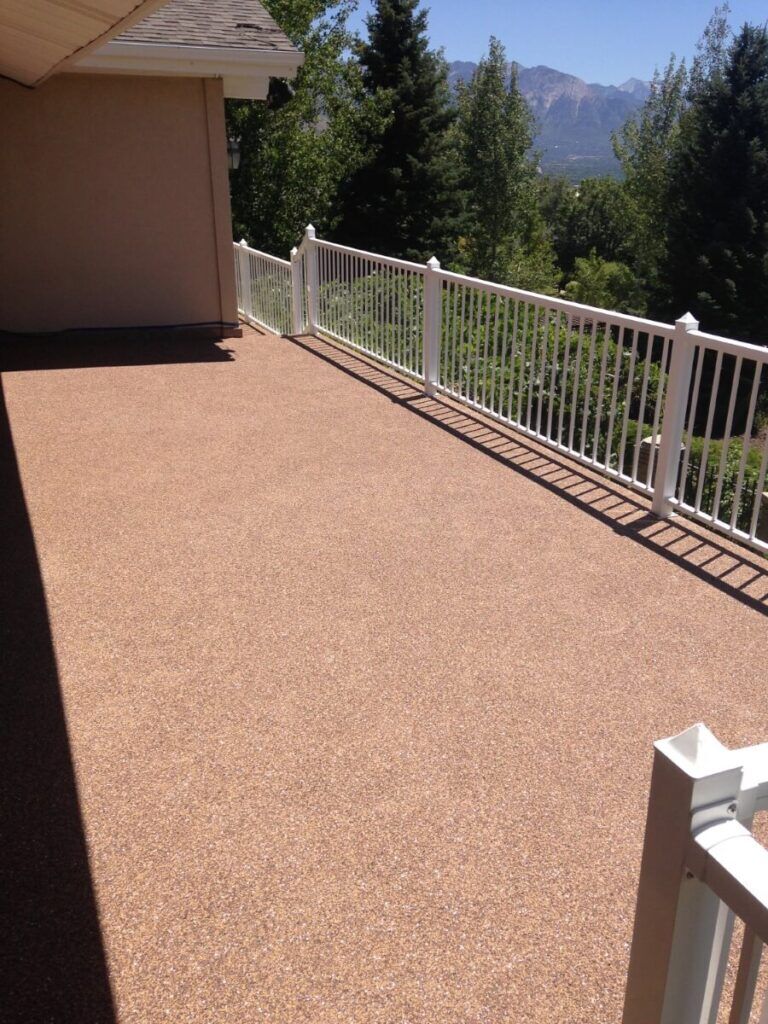
Outdoor decks built over concrete face a different set of challenges from interior floors. Sun, rain, snow, freeze-thaw cycles, foot traffic, and standing water can all affect the surface. Property owners considering a waterproof deck should therefore begin with drainage, slab condition, and exposure rather than choosing a decorative finish first.
A successful outdoor system has to do more than improve appearance. It should work with the way water moves across the deck, protect vulnerable areas, and remain practical through changing weather.
Start by Finding Where Water Goes
The first inspection should focus on slope, drains, edges, low spots, and transitions near walls or doors. Water that regularly pools in the same place can reveal problems that a new coating alone will not solve.
Before installing a new surface, concrete repair may be needed where cracks, spalling, worn edges, or damaged sections have weakened the deck. Repairs should match the type of damage and the outdoor conditions rather than act as a quick patch beneath the finish.
Understand Why Outdoor Exposure Changes the Job
Exterior concrete expands and contracts as temperatures change. In climates with cold winters, moisture that enters cracks can also be affected by freezing conditions.
That does not mean every crack signals a serious structural problem, but the slab should be evaluated before a waterproofing system is applied. Stable surface cracks, moving joints, and damaged edges may need different treatment.
Sunlight is another factor. Exterior finishes should be selected for UV exposure instead of being treated like indoor flooring products.
Pay Attention to Wall and Edge Details
Waterproofing often succeeds or fails at transitions rather than in the middle of the deck. Door thresholds, wall connections, posts, railings, drains, and perimeter edges all deserve careful detailing.
A coating that covers the open slab well can still leave vulnerable areas if these transitions are rushed. Planning them early also helps coordinate the coating with drainage and surrounding building materials.
Prepare the Concrete Mechanically
Outdoor slabs can carry sealers, old coatings, dirt, weathered material, and contamination. Mechanical grinding can remove weak material and create a more suitable profile for the new system.
The exact preparation depends on the concrete and waterproofing product. Edges and tight areas should receive the same attention as the main deck.
Once grinding is complete, dust and debris should be removed before repairs, primers, or membrane layers are applied.
Choose Texture for Wet Conditions
Outdoor decks become wet, so traction matters. However, the roughest possible finish is not always the best answer.
An overly aggressive texture may trap dirt, leaves, or winter debris and make cleaning harder. A surface that is too smooth may not provide enough grip in frequently wet areas.
The right balance depends on how the deck is used, whether people walk on it barefoot, and how often it needs washing.
Plan the System Around Weather
Exterior coating work depends on suitable installation conditions. Temperature, rain, humidity, and concrete condition can all affect when work should begin.
A contractor should review product requirements before scheduling. Applying materials when the slab is too cold, wet, or outside recommended conditions can interfere with installation.
Weather planning matters during curing too. The deck may need protection from traffic and moisture until the system reaches the required stage of cure.
Think About Drainage After the Renovation
A waterproof surface still needs somewhere for water to go. Drains should remain clear, and the finished system should not block intended water paths.
Property owners should continue watching for pooling after rain or snowmelt. Routine inspection around edges, drains, and high-traffic areas can help identify small maintenance needs before they become larger repairs.
Keep Maintenance Simple
Leaves, grit, and dirt should be removed regularly so they do not stay wet against the surface. Spills and stains are also easier to manage when addressed promptly.
Cleaning products should be compatible with the installed system. Harsh chemicals or abrasive tools should not be used simply because the surface is concrete underneath.
Conclusion
An outdoor concrete deck should be renovated as a moisture-management system, not just as a decorative surface. Drainage, cracks, preparation, transitions, UV exposure, texture, weather, and maintenance all influence how well the finished deck performs.
By starting with water movement and slab condition, property owners can make better decisions about repairs and protective finishes. A carefully planned system can improve appearance while helping the deck cope more effectively with demanding outdoor conditions year after year.
